
Navigating the Deep: Why Trust Is Becoming the Currency of the Seafood Industry
The global seafood industry is approaching a decisive moment.
With a market value exceeding USD 800 billion, seafood is among the most economically significant food sectors worldwide. Yet it is also one of the most complex and opaque. Persistent supply chain fragmentation, social risk at sea, and accelerating environmental pressure have created a trust deficit that traditional approaches can no longer resolve.
Record Production, Rising Scrutiny
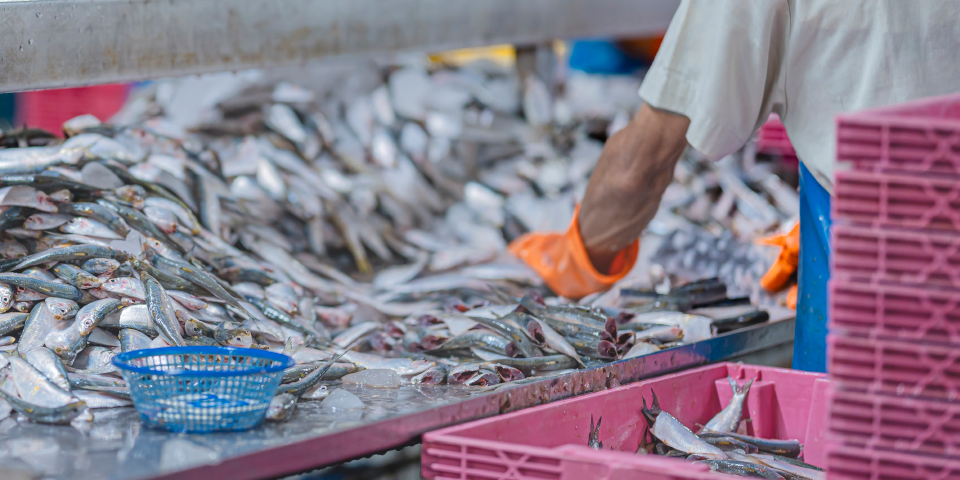 Seafood production has never been higher. In 2022, global aquatic animal production reached 223.2 million tonnes, a historic milestone driven largely by aquaculture, which for the first time surpassed wild capture and now accounts for 51% of total output. The sector generated a first‑sale value of USD 472 billion, spanning more than 230 trading nations and supporting millions of livelihoods. However, these impressive figures mask deeper structural challenges. According to the FAO, 35% of global fish stocks are overexploited or depleted, while Illegal, Unreported and Unregulated (IUU) fishing continues to undermine both sustainability and market integrity. At the same time, labour rights violations; including forced labour, debt bondage, and unsafe working conditions; remain documented in parts of the global fishing fleet.
Add to this a supply chain so fragmented that a single seafood product may pass through six to ten intermediaries before reaching consumers, and the scale of the challenge becomes apparent. Transparency gaps create opportunities for mislabelling, origin laundering, and social risk to go undetected; exposing businesses to regulatory, reputational, and commercial harm.
From Sustainability Claims to Verified Proof
For years, sustainability in seafood relied heavily on voluntary commitments and self‑reported data. That model is no longer sufficient.
Consumers are demanding proof. Investors are scrutinising ESG performance with greater rigour. Regulators are moving from soft guidance to binding obligations. Frameworks such as the EU Corporate Sustainability Due Diligence Directive (CSDDD), forced‑labour regulations, and enhanced traceability requirements are redefining what companies must demonstrate to do business in key markets.
In this new environment, unsupported sustainability claims carry increasing risk. The industry is transitioning from trust assumed to trust verified - and third‑party certification sits at the centre of that shift.
Certification as Strategic Infrastructure
Certification has evolved well beyond a compliance checkbox. For seafood operators across the value chain, it has become strategic infrastructure - supporting market access, operational resilience, and long‑term value creation.
- Market access is now conditional: Leading European and North American retailers increasingly treat certifications such as MSC, ASC, BAP, GlobalG.A.P. Aquaculture, and BAP as baseline requirements. Suppliers that delay certification risk losing market access with limited notice as standards harden.
- Traceability is a competitive advantage: Chain of Custody certification, combined with digital traceability tools, enables companies to demonstrate product provenance across complex, multi‑jurisdictional supply chains. This capability is particularly valuable as downstream buyers face their own disclosure obligations under CSRD and investor stewardship frameworks.
- Social auditing has become essential: High‑profile investigations into labour abuses have made seafood a focus area for human‑rights enforcement. Verified social audits, now function as a form of reputational insurance, providing documented evidence of due diligence and responsible labour practices both in processing plants as on fishing vessel.
- Environmental credibility supports access to capital: As companies begin reporting Scope 3 emissions and engaging with sustainability‑linked finance, credible environmental baselines matter. Certification linked to GHG verification, biodiversity assessment, and TNFD‑aligned reporting strengthens ESG narratives and supports access to sustainable finance instruments.
Integration as the Next Maturity Curve
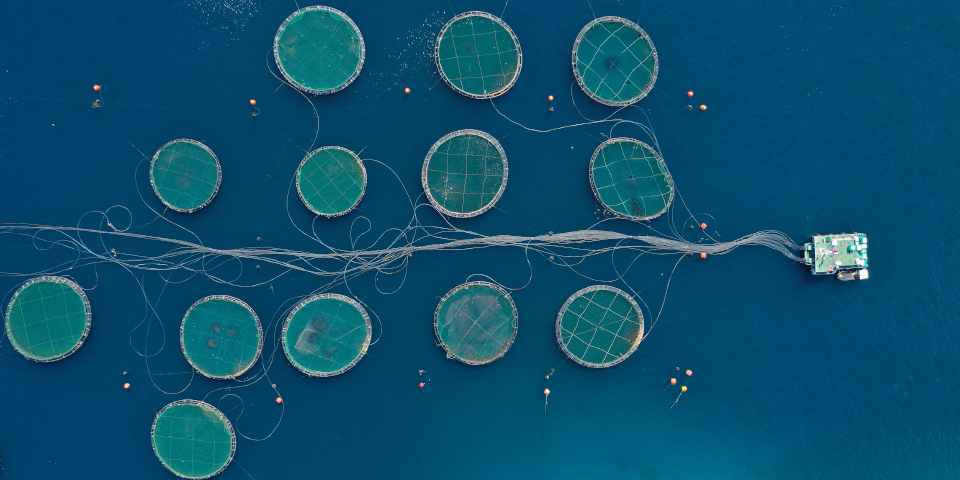 The next phase of seafood sustainability is not about adding more audits—it is about integration. An integrated certification approach aligns environmental, social, traceability, and carbon verification under a coordinated audit structure and data framework. This reduces duplication, lowers total compliance costs, and produces a consolidated, defensible evidence base for regulators, buyers, and capital markets.
This is where experienced Testing, Inspection, and Certification (TIC) partners add particular value. With capabilities spanning fisheries and aquaculture certification, social auditing and GHG verification, Bureau Veritas supports seafood operators across the full ESG spectrum; from vessel‑level labour audits to corporate sustainability reporting - within a globally accredited framework.
A Sea Change Is Underway
FAO’s SOFIA 2024 is unequivocal: certification and third‑party verification play a central role in delivering the Blue Transformation and advancing SDG 14 by 2030.
The seafood companies that will succeed over the next decade are not those reacting to regulation at the last minute. They are those investing now in certified transparency, embedding supply‑chain integrity into their business models, and positioning themselves as trusted partners in an increasingly accountable global food system.
Certification is not the destination.
It is the infrastructure that makes credibility possible.
Key Certification Standards Applicable to Seafood Supply Chains
| Standard | Scope | Focus | Regulatory Relevance |
|---|---|---|---|
| MSC Fisheries Standard | Wild capture fisheries / stock level | Environmental | EU CFP; SIMP species-level documentation; buyer due diligence |
| ASC Aquaculture Standard | Farmed aquatic animals | Environmental | EU food labelling; retailer sourcing policies; CSDDD |
| MSC / ASC Chain of Custody | All supply chain actors handling certified product | Traceability | SIMP; EU catch documentation; corporate due diligence |
| GlobalG.A.P. Aquaculture | Primary producers (farms) | Environmental | Supermarket and HoReCa sourcing requirements |
| BAP (4-star) | Farms, hatcheries, feed mills, processors | Environmental Social | U.S. market access; SIMP alignment; CSDDD |
| SMETA / SA8000 | Processors, vessels, farms | Social | UK Modern Slavery Act; EU Forced Labour Regulation; CSDDD |
| ISO 14064-3 / GHG Protocol | GHG emissions at entity or product level | Environmental | CSRD/ESRS disclosure; sustainability-linked finance; TNFD |